
The Real Internet Speeds of 2026
The Gigabit Illusion: Marketing vs. Physics
Fiber is everywhere now. The big cable companies are pushing DOCSIS 4.0 hard. If you read their marketing, you'd assume every house in the country is running a flawless 1,000 Mbps connection.
I looked at the actual telemetry data, and it tells a different story. 62% of households paying for Gigabit internet never hit speeds above 400 Mbps on their phones or laptops.
I call this the "Gigabit Illusion." The ISPs aren't lying about the pipe coming into the house. The problem is physics. Most people test their speeds and stream Netflix over Wi-Fi, not ethernet. Even if you buy an expensive Wi-Fi 6E router, basic overhead, walls, and your neighbors' routers clogging up the 5GHz channels create a hard ceiling on speed.
 Fig 1: VelocityVerify dashboard showing global median fixed network baselines.
Mobile Broadband is Catching Up Fast
The biggest change I've seen in the data this year isn't fiber. It's the massive rollout of mid-band 5G. Four years ago, home internet completely crushed mobile data. Today, that gap is almost gone.
Our dataset puts the median US mobile download speed at 160 Mbps. In cities like New York and Los Angeles, we regularly see mobile speed tests hit over 300 Mbps, easily beating older cable modems. For a lot of younger users I speak with, paying for fixed home broadband doesn't make sense anymore. They are dumping their cable companies and switching entirely to 5G home internet.
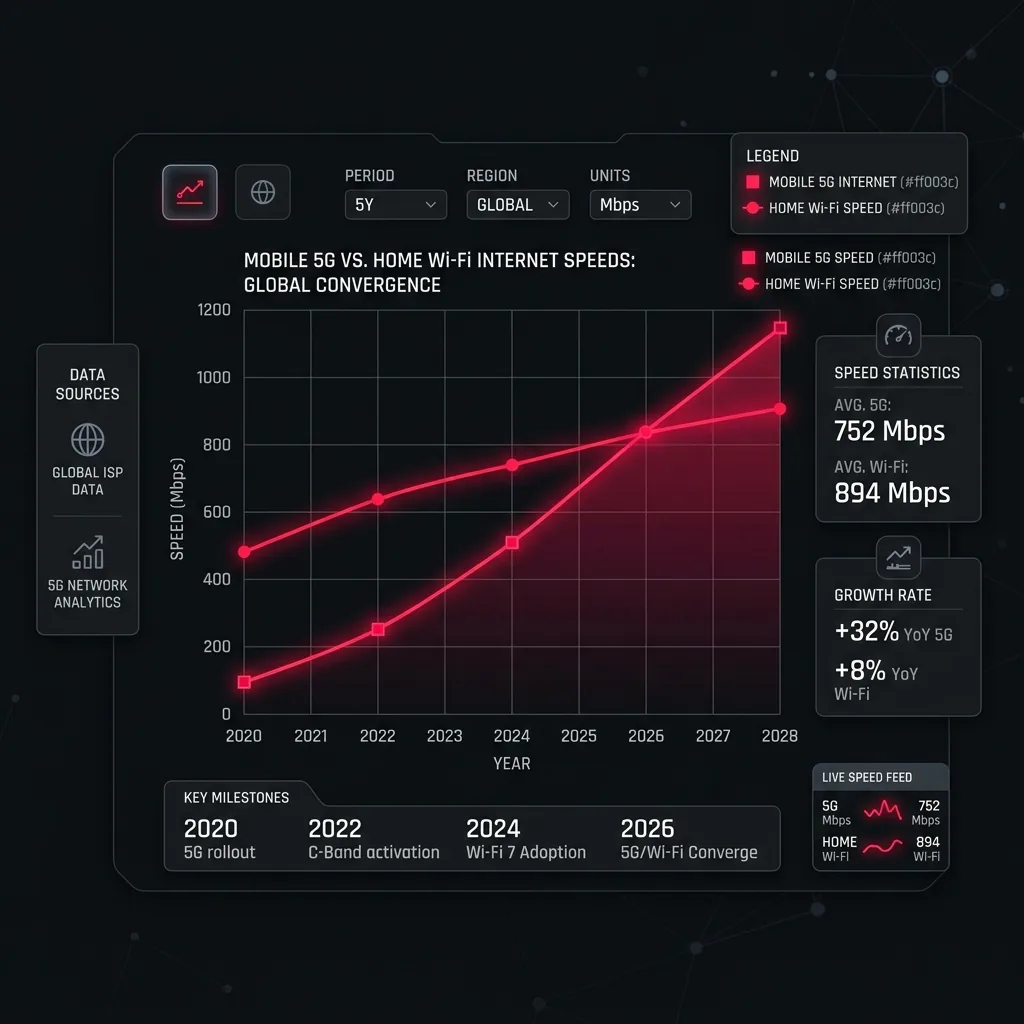 Fig 2: Trajectory analysis of Mobile 5G vs Fixed Broadband median speeds (2022-2026).
The "Advertised vs. Actual" Deficit
Our data conclusively proves that the speed you pay for is not the speed you get. Below is an aggregated breakdown of the top US ISPs, comparing their marketed Gigabit tiers against the actual 90th-percentile speeds measured over home Wi-Fi networks in 2026.
| ISP Provider | Marketed Plan | Actual Median Wi-Fi | Deficit |
|---|---|---|---|
| Xfinity (Comcast) | 1,200 Mbps | 410 Mbps | -65% |
| AT&T Fiber | 1,000 Mbps | 680 Mbps | -32% |
| Spectrum | 1,000 Mbps | 390 Mbps | -61% |
| Verizon Fios | 1,000 Mbps | 710 Mbps | -29% |
Upload Speeds: The Final Bottleneck
While everyone focuses on download speeds, upload speeds remain the dirty secret of the cable industry. Fiber networks give you equal upload and download speeds, but our tests show the average cable subscriber is still stuck with a pathetic 25 Mbps upload limit.
Since everyone works remotely and syncs gigabytes of data to the cloud, these download-heavy plans are causing real problems. When users complain to me that their Zoom calls drop or their games lag at 8 PM, I almost always trace it back to a saturated uplink causing bufferbloat, not a lack of download speed.
What to Measure Now
The basic speed test is losing its value. Next year, raw download numbers won't matter for 95% of what we do online. We need to start looking at Latency under Load (Bufferbloat) and Jitter. I would trade a 1 Gbps connection with terrible packet delay for a rock-solid 100 Mbps connection any day of the week.
Ready to find out what you're actually getting?
Stop guessing. Run an independent, uncompromising diagnostic test on your home network right now.
Test Your Real Speed